January and February 2021

Between moving into a new house, my brother’s wedding, and our crazy ice storm I realized I never published a recap of January. I had it written up all nice & neat and ready to go, but it never got published. So, I figured I might as well combine it with February for a special two for one deal hahaha!! If you’re looking for a forecast than hang tight. I’ll have a forecast out real soon as well. 🙂

January 2021

It may seem like distant memory, but the first 12 days of January were stormy, wet, and windy. Salem picked up 6.72″ during this time frame. The most significant storm arrived on the 12th bringing 1.93″ of rain, 45mph wind gusts to Salem, and localized flooding in both the Coast Range and along the coast itself as powerful waves crashed ashore. Flooding with this storm was particularly bad on the Mary’s River down near Corvallis where heavy rain stalled out for a longer period of time causing a sharp rise in that river.
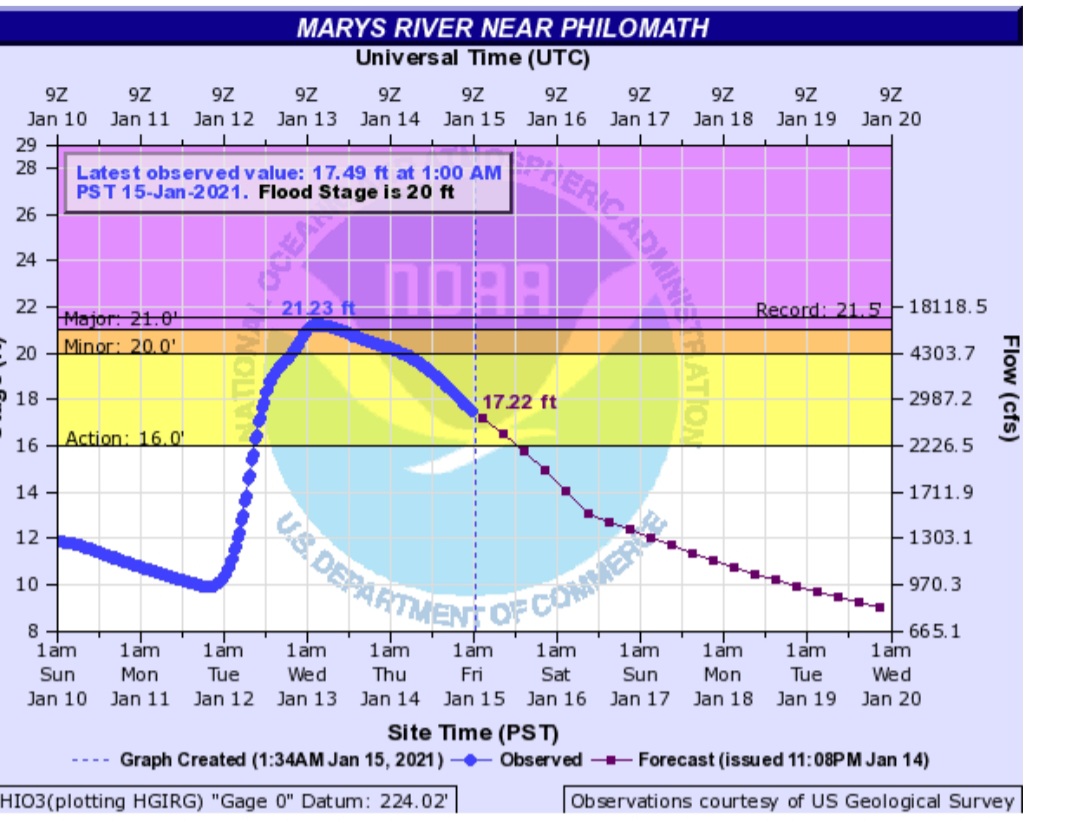
This chart from January 15th shows the sharp spike on the Marys River near Philomath (west of Corvallis). This area was hit especially hard by flooding.

The second highlight was the much warmer than normal temperatures which dominated the majority of the month. Salem had 18 days with highs in the 50s. Low temps reached or fell below freezing 9 days, but the coldest temp for the entire month was only 26°. Salem ended the month 2.48° above normal – a very mild January for sure! A brief cool spell near the end of the month offset some of the warm weather, but it also set the stage for the 3rd and final highlight of January 2021.

A surprise snowstorm hit Salem early in the afternoon on the 26th. If you live east or north of downtown then you might not call what took place a snowstorm, and for those parts of town it really wasn’t; however, for areas west and south of downtown what took place was about as legit of a snowstorm as we get around here. Heavy wet snow dumped during the afternoon hours of the 26th leaving behind 3 to 4 inches of snow in both south and west Salem. Snow quickly covered roadways making for treacherous driving conditions specifically in the hilly parts of Salem. Downtown had just shy of 2 inches while Keizer and areas east of Lancaster saw accumulations of an inch or so at most. Locations west of Salem and down towards Dallas & Corvallis picked up 3 to 5 inches of snow as well. It was a very localized event which favored the western Willamette Valley, but for some of these locations it was the biggest snowstorm since January 2017. The snow melted away quickly though as we returned to more mild January weather the very next day.
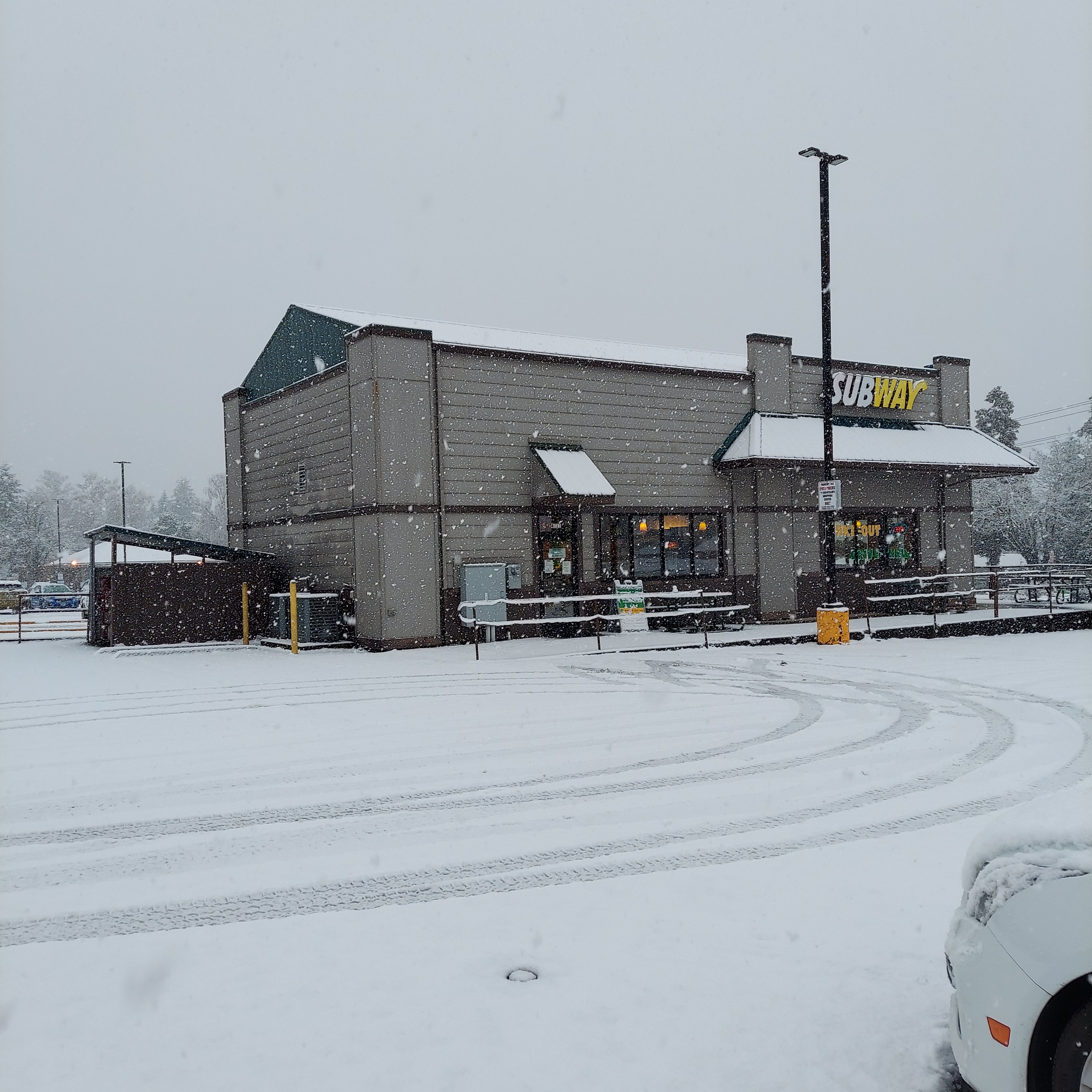
Snow accumulates in south Salem near Liberty Road.

Summary

January 2021 was quite mild ending 2.48° above normal, and wetter than normal with 8.5″ of precipitation in total giving us 143% of our average precip for January. In the snow department we had an unofficial snow total of 2.5″. Quick reminder that snow totals are no longer kept track of at the Salem Airport making it difficult to obtain official snowfall totals for Salem.

February 2021

Officially no snow was recorded in Salem this month. With that said, February brought us our coldest high temp of the season 0f 30° on the 12th. A whopping 21° colder than normal for that day! This was the same airmass which also brought copious amounts of freezing rain.

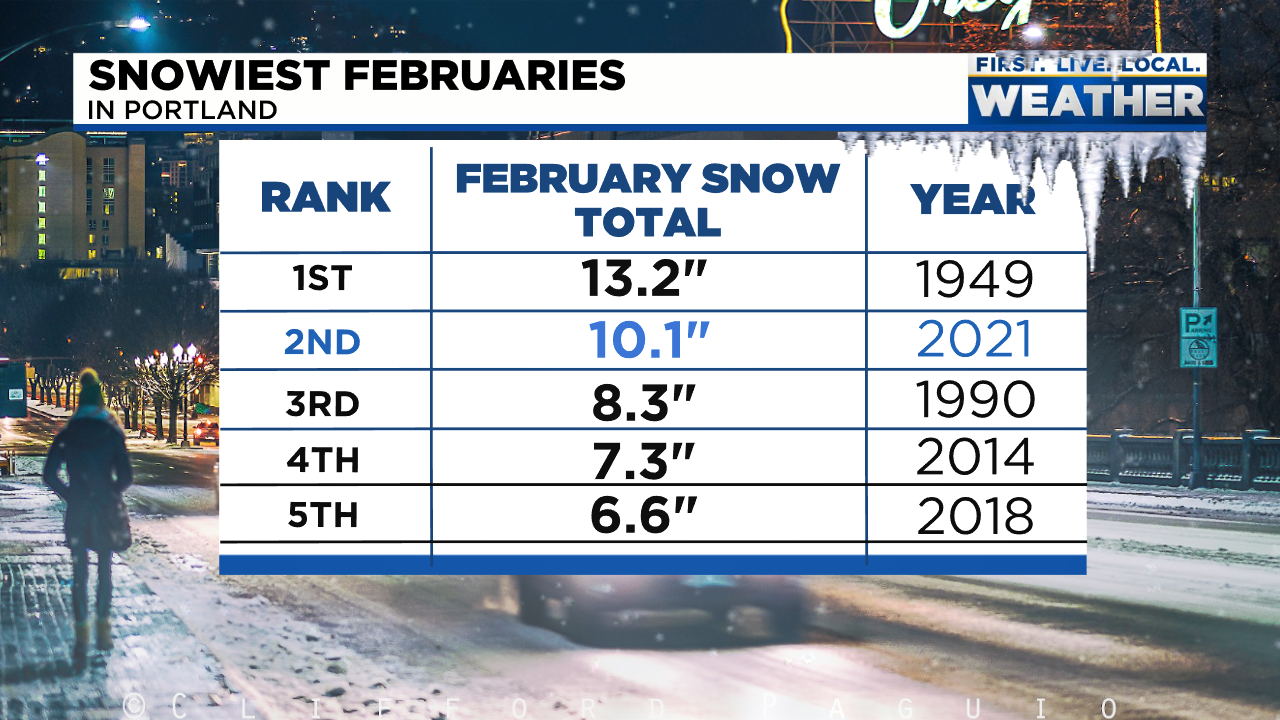
I’ve been making the case for awhile now that February has become our snowiest month of the winter. Sure there was no snow this February here in Salem, but the cold and freezing rain still helped to solidify this idea that February has become an increasingly cold and wintry month – much more so than in the past. Same story for Portland with the biggest difference being they actually saw snow (ten inches in fact) from the storm this past month. Looking at this graphic produced by Mark Nelson over at Fox 12 Oregon, I find it interesting how 3 of Portland’s snowiest Februaries ever recorded (records go back to 1938) have taken place during the past decade. If we were to expand this graphic a little more, February 2019 would be on there with 6.5″ of snow making that 4 of Portland’s snowiest Februaries occurring in the past ten years….
There definitely seems to be a trend for snowier and colder Februaries around here, and the same goes for March too. I have one more weather graphic from Fox 12 showing measurable March snowfall in Portland over the past 50 years. Again, seems like March has over performed in the snow department during this most recent decade.

It seems like winter is taking longer to get going in recent years with less snow in November and December, but once winter finally gets its act together it’s been slower to leave resulting in colder and snowier weather in February and March than compared to what we use to see. Curious to see if this is something long term or just a temporary trend….

Moving on lol, the only other highlight from around the region would be the big snow totals seen up in the Cascades during the second half of February. Hoodoo Ski Area closed out the month with around 103″ of snow at their base. No shortage of snow up there!

Summary

Other than our brief and intense blast of cold weather and freezing rain storm, the rest of the month was very tame. Salem had nearly 120% of our average February precipitation making for a slightly wetter than normal month. This is typical during a La Nina winter, so no big surprises there. As far as temperature goes, Salem had 7 days which reached or went below the freezing mark, and we ended the month 0.6° below normal. February 2021 goes into the books as slightly cooler and a bit wetter than normal.

We will see what March has in store for us, but I suspect above normal precipitation with lots of mountain snow as this would be typical of a La Nina winter and typical of what we have seen in recent years, but time will tell.

Take care!
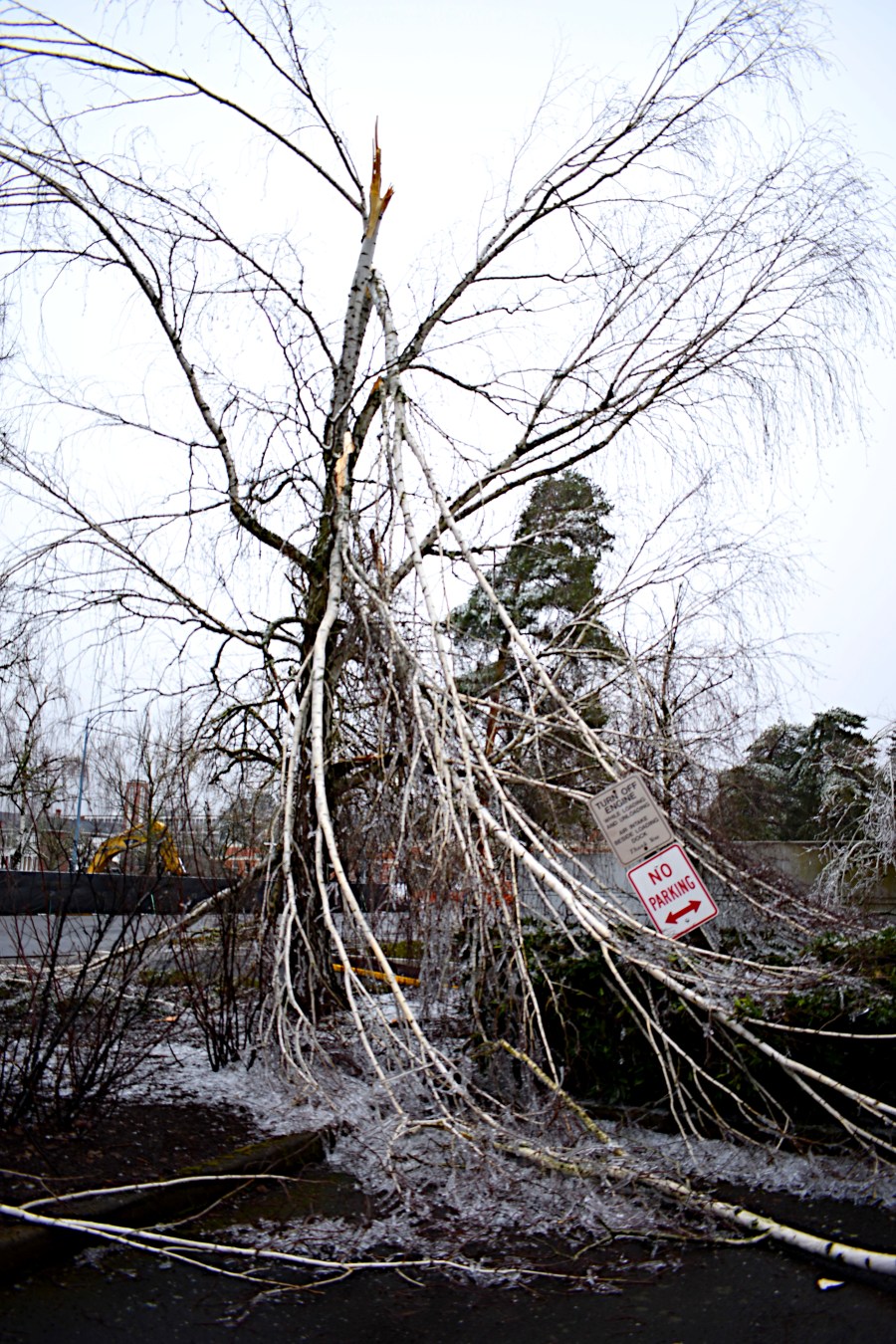
Ice Storm 2021 Recap

This post has been a work in progress for several days now as I’ve gathered pictures and a few stats all while dealing with no internet up until this past Sunday. I wanted to do a detailed review of our historic and destructive ice storm including an overview of the events which took place, some photos and reports from around the region, and a few thoughts going forward. This was definitely a historic storm and deserves a post like this for reference in the future.

TIMELINE

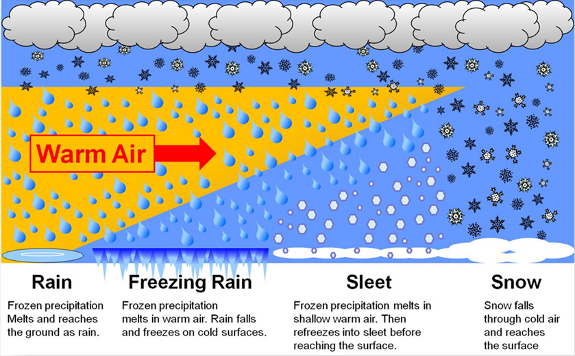
A combination of very cold arctic air pouring south from Canada and two very moist pacific systems led to what ended up being the worst ice storm here in decades. Around two tenths of an inch of freezing rain accumulated Thursday night as temps fell below freezing. A few snowflakes and a little bit of sleet mixed with the freezing rain specifically in areas north and west of downtown; however, for the most part it was freezing rain. I threw in this graphic again to illustrate why we saw freezing rain instead of snow despite temperatures being 28 to 32 degrees the whole time.

In short the cold air over Salem was just not deep enough to change the rain back into snow with this storm.

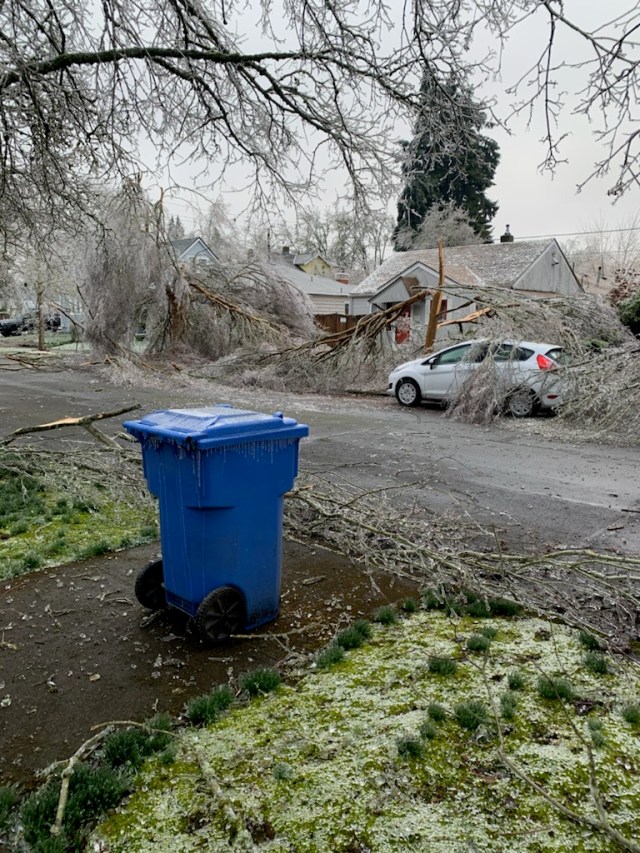
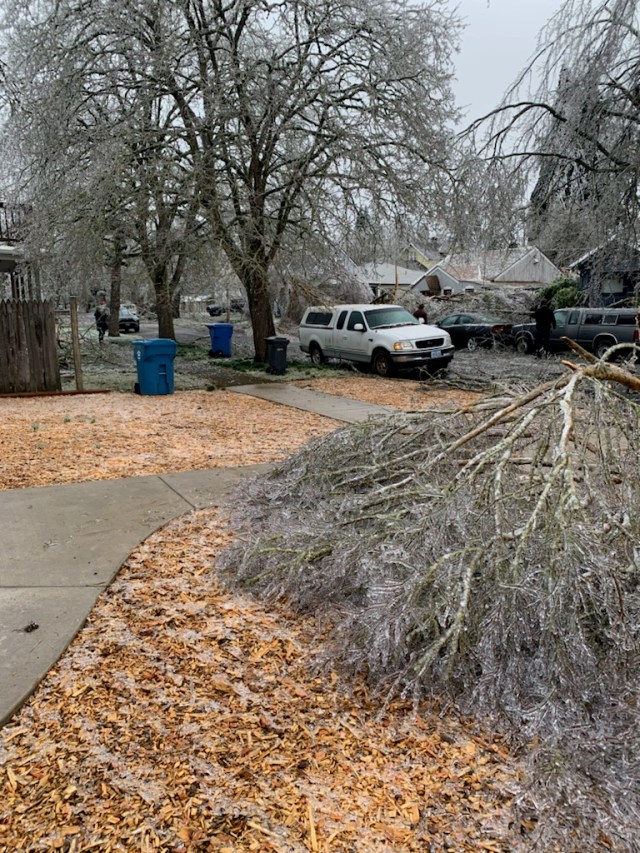
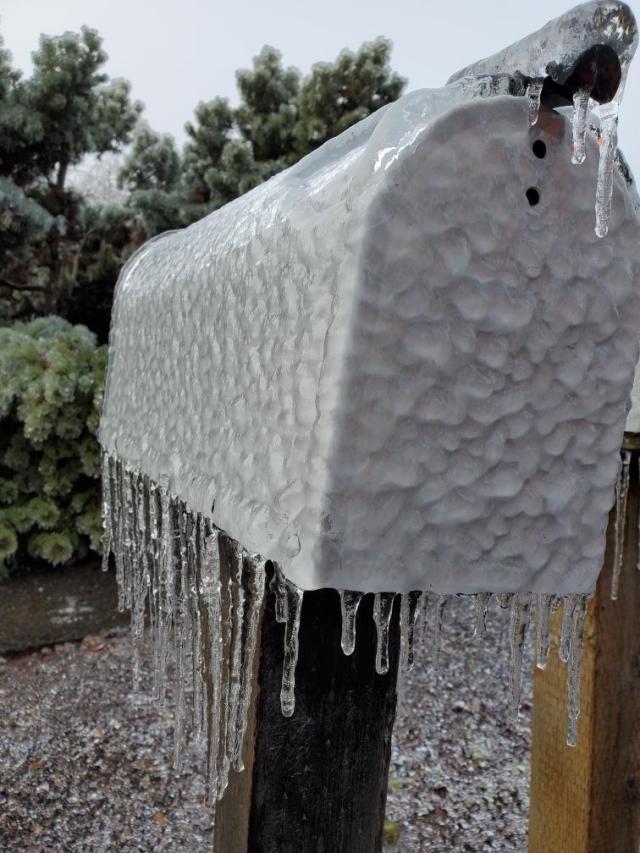
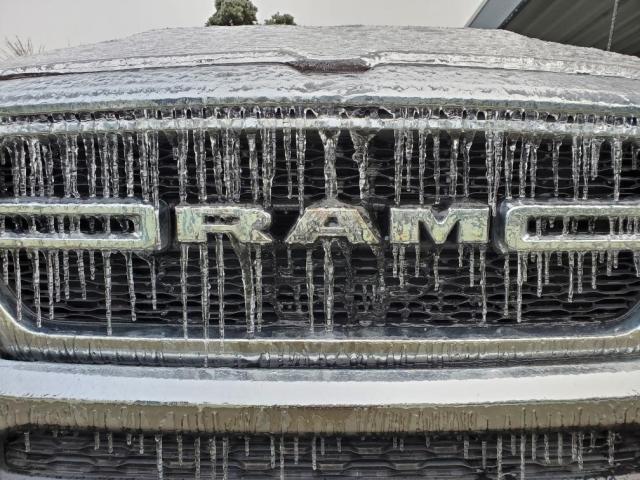
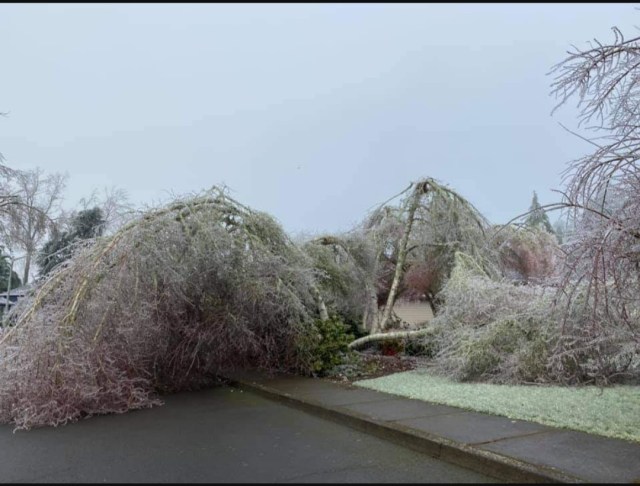
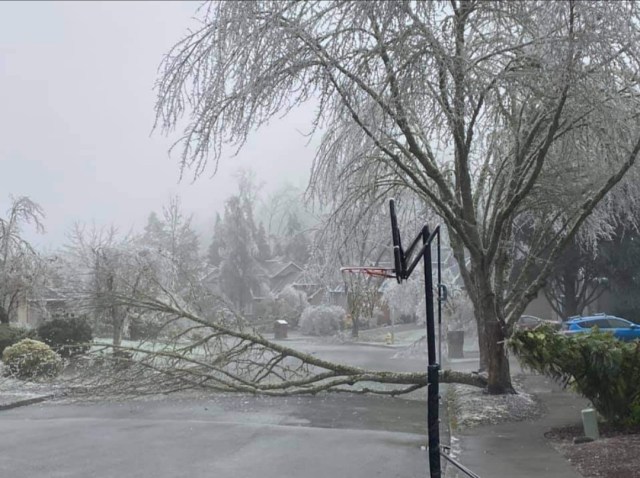
Friday was brutal with light freezing rain on and off all day long and a high of 30°. I still need to do some more digging, but it appears Salem tied its record for coldest high temp that day. BRRR!! Then a second and much stronger pacific storm rolled in right at sunset bringing around an inch of additional freezing rain which froze onto all elevated surfaces in the Salem area. A lot of widespread totals 1 – 1.25″ with a few isolated locations reported up to 1.5 inches of freezing rain when all was said and done! That is a ton of extra weight for trees and power lines to hold up which is why we saw so much destruction. To make matters worse the Portland area continued to see freezing rain Sunday through early Monday morning which led to thousands of outages up in that area as well turning this into a region wide disaster.

WHY SO BAD?

The shear amount of ice was hands down the main reason this ended up being a historic event here in the mid Willamette Valley, but there is a little more to it than that. The Salem area picks up somewhere close to a quarter inch of freezing rain ever few years with the winter of 2016/2017 being the last time we saw any. December 2008 gave parts of the Salem area a fairly major ice storm with around .75″ of ice. One has to go back to January 2004 for the last time any part of Salem received totals of an inch or so of freezing rain, and you have to go much further back (several decades) in time to find accumulations around here which come close to 1.5″ of ice!! So it’s been a very long time since we have seen a major (inch plus) ice storm. The long period of relatively “tame” weather has allowed our deciduous trees to grow and grow and grow much lager than they otherwise would be. Plus it’s not like Oregonians are known for keeping their trees trimmed lol. Something we could discuss another time… Anyway, the combination of overgrown trees and a historic amount of ice coupled together to give Salem and parts of the Portland metro area one of the most costly, darkest, and longest power outage disasters in decades.

THE STORM AND THE AFTERMATH

At the peak of the storm, more than 350,000 PGE customers here in Oregon had no power at the same time with over 5,000 power lines and three substations down! In total PGE had nearly 490,000 customers lose electricity at some point during the storm. Those stats do not include smaller utility companies, so when we add in the outages reported by companies like Salem Electric and Pacific Power, the number of customers without power goes up an additional 50,000 or so. A point of clarification, a customer is either a household, apartment complex, or business, which is one reason why it’s difficult to know exactly how many people ended up losing power. I imagine final numbers will come out eventually, but regardless, there were an awful lot of people without power, and the fact that there are still a few without electricity goes to show just how destructive this storm was.

THE STORM IN PHOTOS

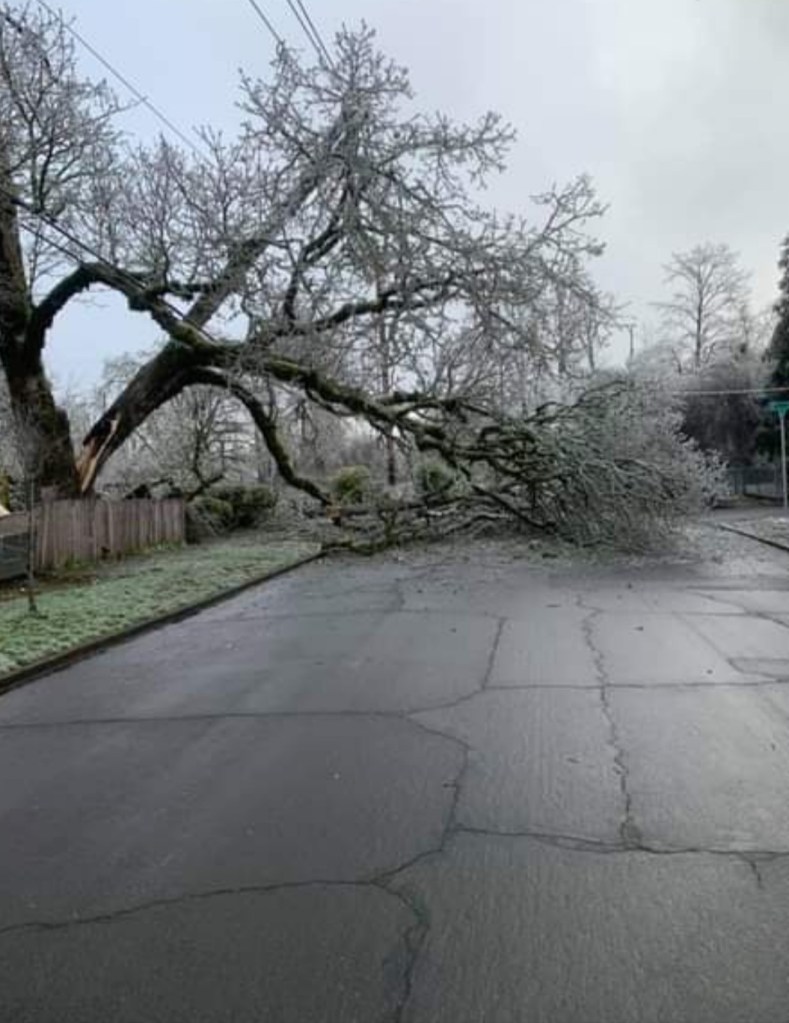
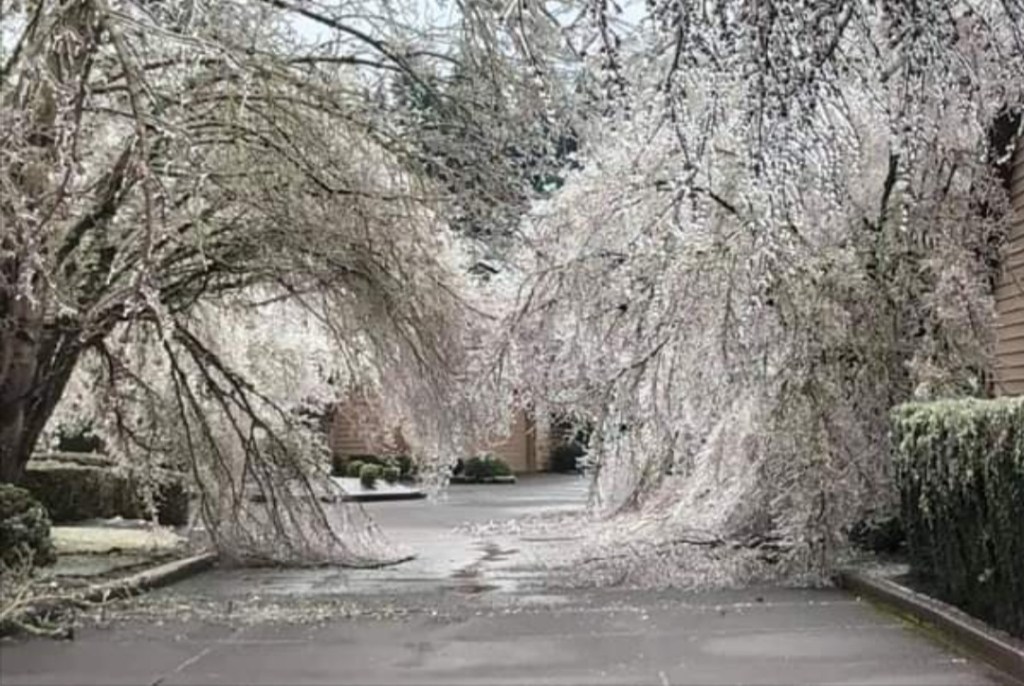
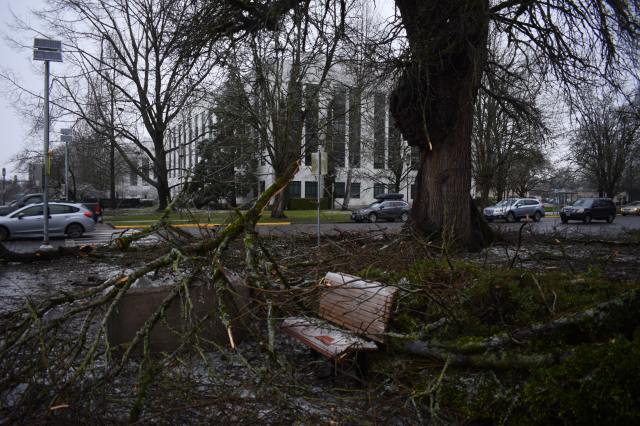
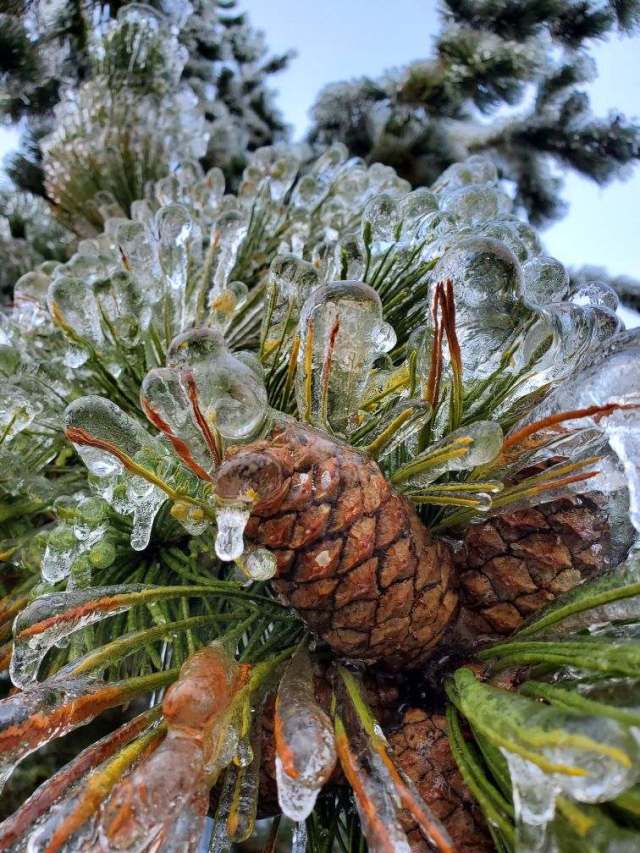
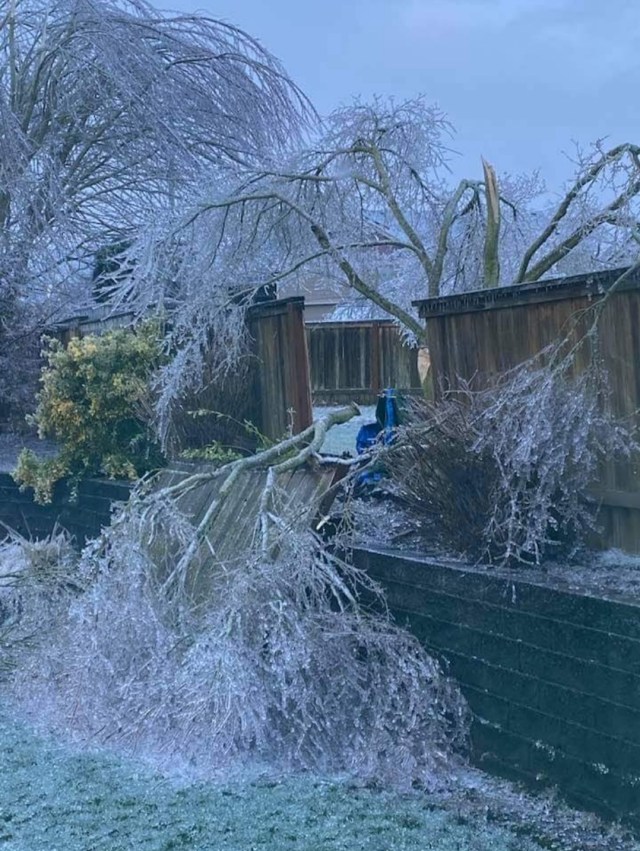
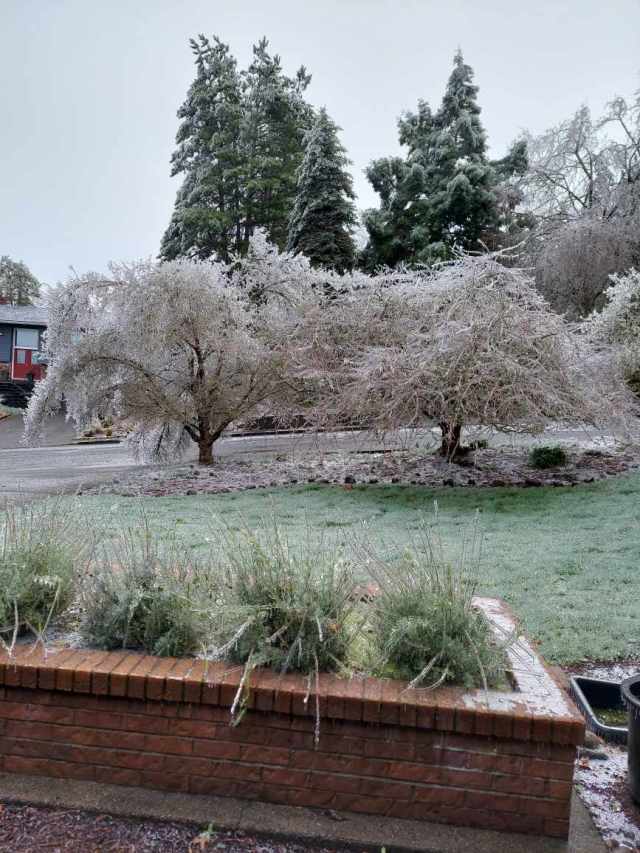
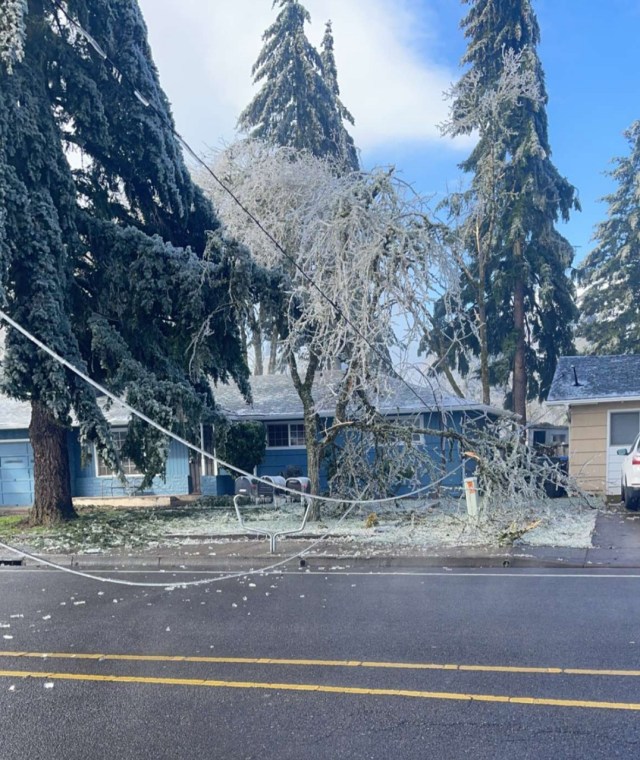
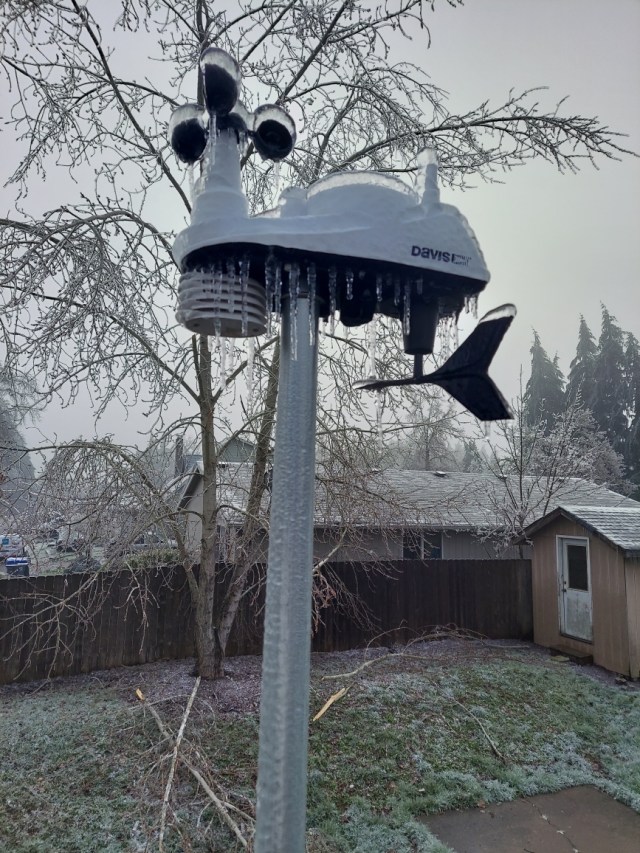
Below is a slideshow of photos which for the most part were shared with me by some wonderful followers, friends, and family members showing the ice and destruction from this historic freezing rain storm. This will be the storm we measure up to for years to come no doubt about it.

A FEW THOUGHTS ON STAYING PREPARED

Finally, I would add that between the shutdowns from COVID, the fire and smoke disaster this past September, and now this ice storm, it’s definitely (if you don’t already) a good idea to have at all time extra food, water, essential toiletries, medications, light sources, and sources of heat. I’m not promoting hording. In fact, hording is something I think people should avoid lol; however, there is something to be said about keeping some extra supplies on hand and gas in the car for when disaster strikes. While Salem does not received the sever weather that parts of the plains and gulf states receive, it is still remarkable looking back through history as a weather enthusiast and seeing the shear lack of extreme weather here in Salem (floods, snow or ice, and wind storms etc) over the past decade when compared to previous decades prior to this past September when we had the historic east wind event which helped spread the fires. Regardless, it would be foolish to think we will somehow be disaster free now for long time to come. There is no one season in which all disasters strike, and they can happen at anytime, so be prepared, be ready, and let’s all hope and pray that we are in fact done with these “once in a generation” events for awhile.

Bottom line is we never know when something could happen, so be ready. As the storm drew near it become clear we would see a “top tier” ice storm and we did, and while power outages were predicted, but I never would have guessed that so much of Salem, Keizer, and the northern Willamette Valley would end up without power for multiple days to over a week!

Lastly, let’s also hear it for the utility companies and related work forces who have worked incredibly hard restoring power and internet!! I’ve seen their trucks rolling around town at all hours of the day almost every time I’ve wondered out.

The Good, the Bad, and the Ugly. The January 2021 edition

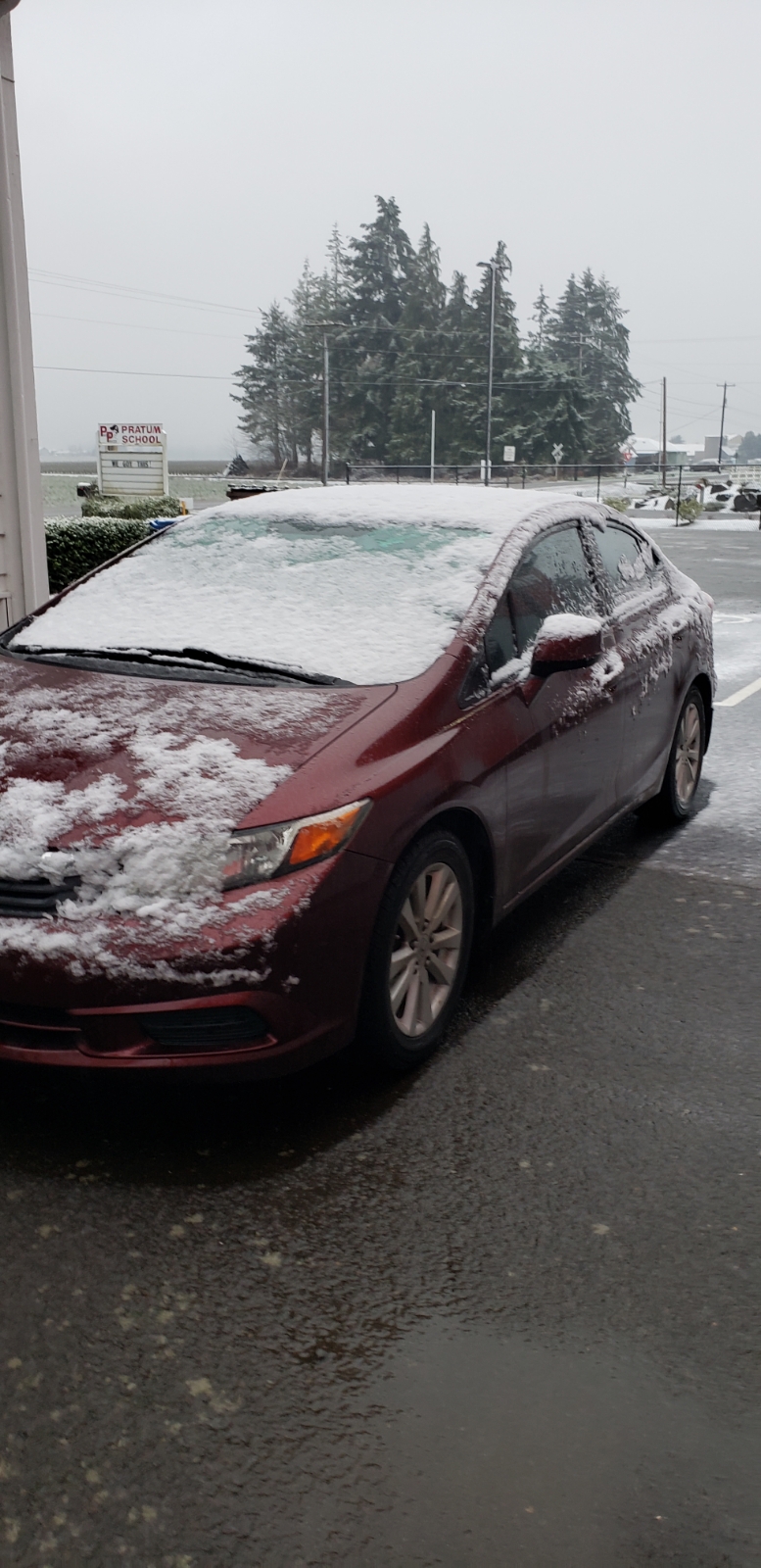
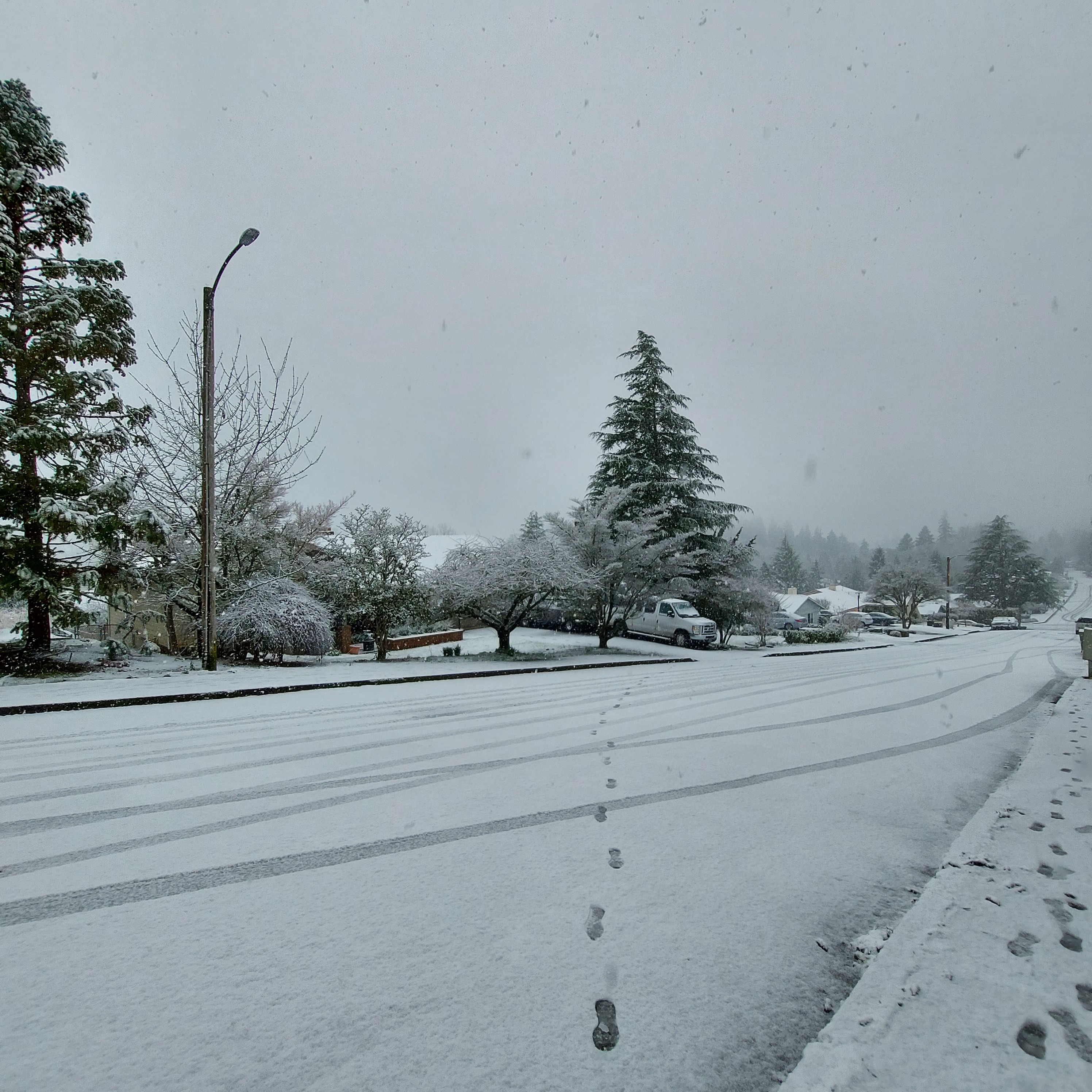
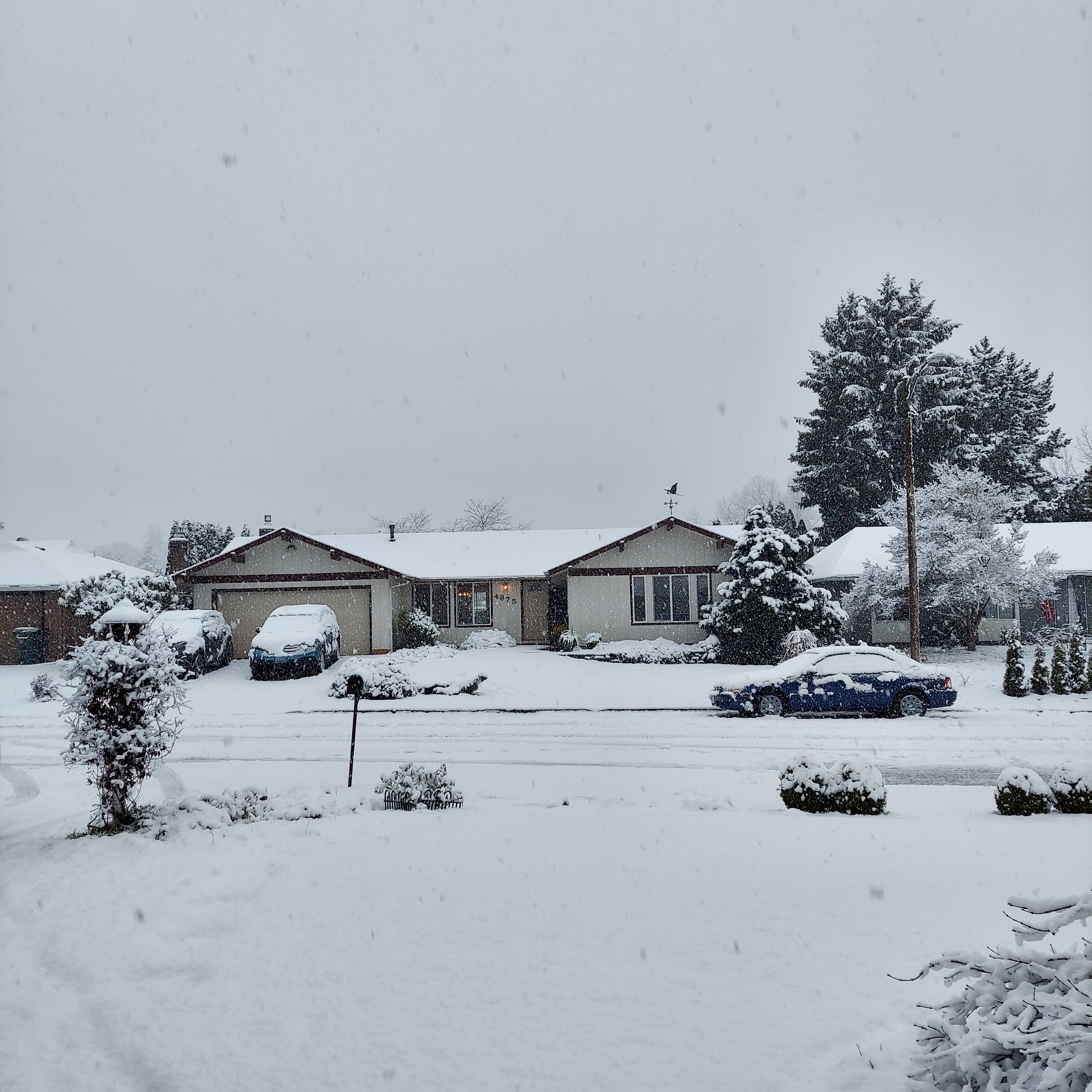
I put together a nice little recap of our snowstorm and figured I might as well kick it off with a positive. THE GOOD. I believe I did a good job of emphasizing how the best chances for snow were going to be locations on the western side of the Willamette Valley, and that part held true. The highest snow totals were found in locations further west towards the Coast Range including Corvallis, Dallas, Amity, west Salem and Newberg. All of these locations scored really well. THE BAD. IT snowed in all of Salem, and in some spots it was a lot. The heaviest snow totals were west and south of town with lighter totals as one headed further east. In fact, there was generally very little snow at all east of Cordon Road. This picture came in from a loyal viewer, follower, and friend near Pratum just a few miles east of Salem. As you can see, not much snow there at all.

This second pic was taken around 2:30PM in West Salem. Definitely snowier here.

Of course, south Salem almost always scores big when it comes to snow, and this was no exception. 3 to 4 inches in the higher hills down south and that is where this third picture was taken.

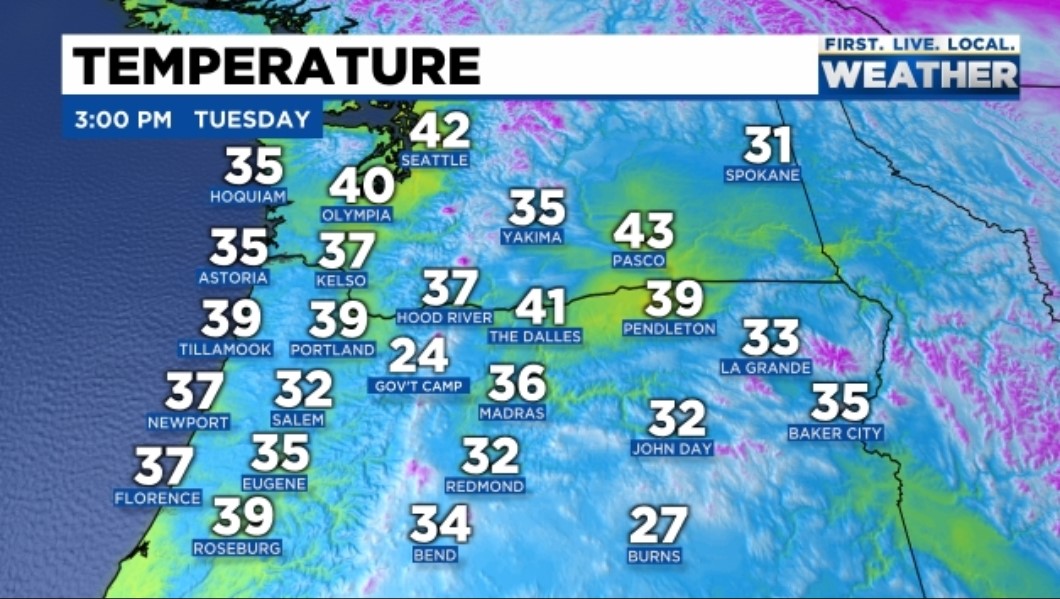
Next take a look at the temps from around the region at 3PM Tuesday. Eugene was at 35°, Portland was at 39°, and even the gorge was fairly mild. Often times we get cold air through the gorge when we have valley snow, but this time that was not the case. The Dalles had a “balmy” temp of 41°. Notice Salem sticking out big time sitting at 32°. The whole event was bizarre when you look at how “mild” the rest of the region was.

In Salem we had a high of 40° at the airport right around 1PM, and then the snow moved in… By 2:05PM we were down to 32°. An 8 degree drop in one hour!! So where did the cold air come from? Well quite literally it came from above. Haha for real though, the heavy precip dragged cold air from higher up in the atmosphere down to the surface which is why as soon as the steady/heavy precip ended we switched back to a light rain that night. The second factor that led to snow was a process called evaporational cooling. When precipitation falls through a dry airmass like the one we started with Tuesday morning, it takes the heat out of the air causing the temperatures to drop. I just wasn’t expecting an 8 degree drop in one hour from those two factors. As someone who has watched and forecasted the weather around here for a while, the whole thing was a huge shock.

If I could go back in time and redo Tuesday’s forecast I honestly would not change much. Looking at my previous forecasts I clearly stated it was going to be a close call for snow, and I had been watching the possibility of snow on Tuesday for several days in advance. Instead of removing the chance for snow all together like I did, I should have left it in there, emphasized how the chance was slim, and then laid out exactly what had to happen in order for snow to stick in Salem. But oh well, I still enjoyed the snow a great deal even if it was a surprise, and I hope you all did too! It was a lot of fun seeing it come down, and I was thankful I had the ability to get out and enjoy it while it lasted!

The other thing I noticed was I had a few errors in my posts over the past few days. Sorry about that. I even forgot to attach an image of the forecasted radar that I wanted to share with you in one of the posts. Oops!!!! I’ve definitely been busy and sidetracked with some good, but big changes at work, looking for and getting ready to move into a new place here in Salem, and well I’m still out an editor. The biggest problem with finding an editor is the pay is crummy haha lol 😉 🙂

Anyway, have a great rest of your day! I’ll have a forecast out later tonight or tomorrow, and I can tell you with confidence that our chances for snow are not over…. 🙂 February is looking chilly!!

Winter 2020/2021 Outlook

Salem had a toasty high of 85° today!! The next several days are going to be much warmer than normal with highs in the mid 80s as we end September and begin October. I imagine everyone will be doing their best to enjoy the nice weather because we all know our wet season is just around the corner…

Since fall is here, even if it doesn’t totally feel like it, I figured it could be both fun and a good time to share a few thoughts on this upcoming winter. I’ve never done something quite like this before and to be honest some years, like last year, are more of a crapshoot; however, this year we are expecting a moderate La Nina which gives us a few extra hints as to what type of weather we are likely to see this winter.

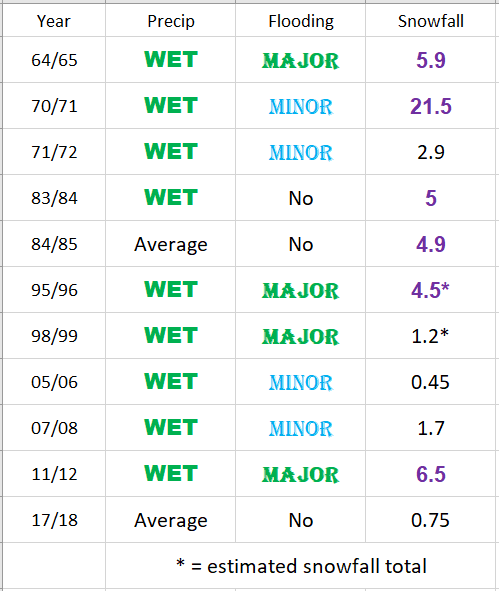
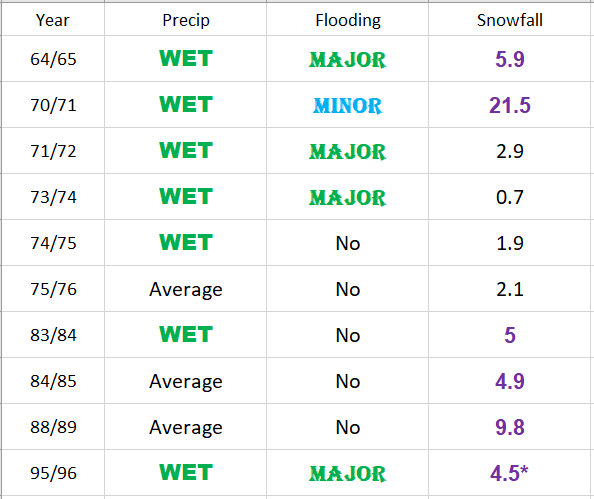
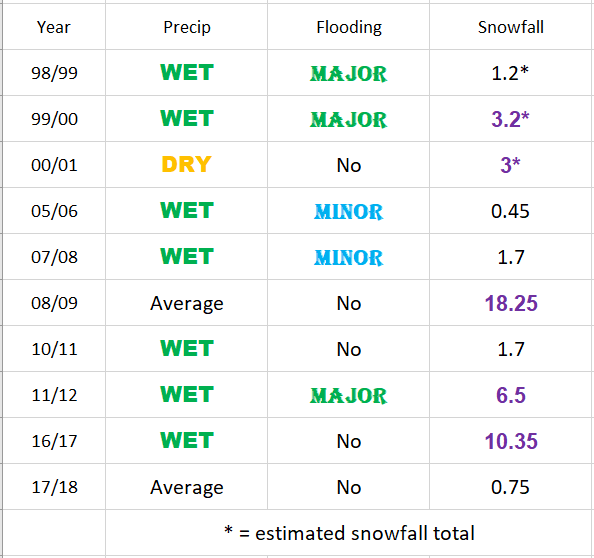
For this discussion I analyzed 11 La Nina winters which had similar strength to the one being predicted this year. I’ll also be referring to the months of November through March which I consider to be our primary storm/winter season. There are some years where the storm season really gets going during mid October, and this could be one of those years, but the statistics I looked at and the focus of this discussion are centered on the months of Nov – Mar. This first chart shows those 11 La Nina winters and how they fared in terms of precipitation for Salem, whether or not there was a valley flooding event, and Salem’s total snowfall in inches during each of those winters.

* = Estimated snowfall total as official records are not available those years.

1.) Perhaps the number one thing that stands out is how wet La Nina winters typically are in the valley. 9 of the 11 La Ninas surveyed gave Salem above normal precip. That lends pretty solid confidence we will end up wetter than normal. As is the case every winter, Salem should still see a number of dry days mixed in. The key thing to remember is that overall statistics favor a wetter and rainier than normal winter for the Willamette Valley.

2.) Not shown on the chart, but odds also favor an above normal or at “worse” an average mountain snowpack this year which is great news for skiers/snowboarders and our water supply. One caveat is there have been a few La Nina winters which got off to a slow start in the snow department meaning Nov and Dec weren’t necessarily real good in terms of mountain snow; however, the vast majority of those winters still saw an excellent second half to the ski season as snow ramped up nicely in Jan and Feb of those years.

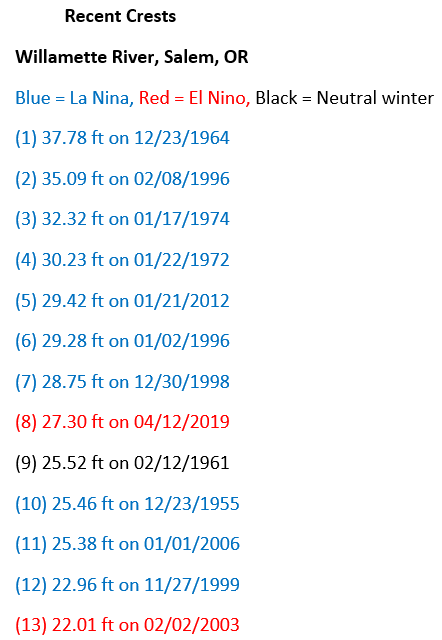
3.) This next one is not good news. Keep in mind I’m strictly talking odds here by looking at what happened in past La Ninas, but for this one the odds are not in our favor. Of the 11 years surveyed, 8 saw a notable (either minor or major) valley flooding event. The percentage of La Nina years with significant flooding events is high when compared to non La Nina winters. Below is a list of historic flood events on the Willamette River in Salem. This list only contains floods occurring since flood control dams were built in the 50s. It’s no coincidence that 10 of Salem’s 13 worse floods occurred in La Nina winters, and while it’s far from certain, one would be wise to keep this in the back of their mind, especially if you live in a flood or mudslide prone region as the odds of seeing some sort of flooding event this year are higher than normal….

Data courtesy of NOAA
https://water.weather.gov/

4.) Perhaps the most anticipated question is whether or not it’s going to snow here in the valley. Well, 11 of the 11 La Nina winters I reviewed in detail produced at least some snow here in Salem. Woo hoo! Breaking it down further, 6 of those years produced enough snow for sledding or building a snowman in (highlighted in purple on the chart). The other 5 only saw minor accumulations of a slushy inch or two. Take it for what you want, but odds are high we at least get an inch or so of snow, and odds are higher than normal we see a respectable/decent snowstorm at some point this winter. Far from a slam dunk as I like to say, and we are talking statistics, but it does provide some extra hope for us snow lovers. Definitely better odds than last winter! 🙂

So yes, may the odds be ever in our favor, and with how 2020 has gone I really do mean that. A quick recap for you:

1.) Odds favor a wetter/stormier than normal winter overall.

2.) Odds favor a good mountain snowpack and good year for ski resorts.

3.) Increased odds for a significant valley flooding event.

4.) Higher than normal odds for some valley snow.

For reference, here are all La Nina winters (regardless of their strength) since 1960. Again, the pattern is the same. Almost all of them ended up wetter than normal, many of the years had flooding here in the valley, the majority of these years had a good mountain snowpack, and all of them produced at least some measurable snow (albeit some years it was no more than an inch or two) down to the valley floor.

The odds definitely favor a more active winter, but only time will tell, so be ready for anything, and then I guess just sit back and see what happens…